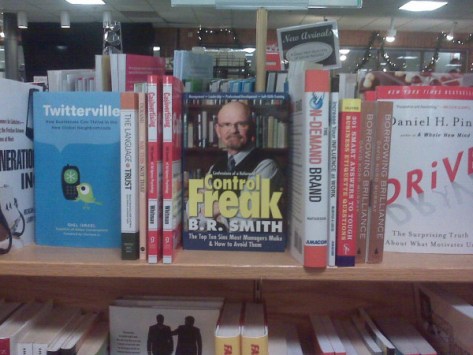
You Can’t Control Everything All Of The Time

The key to time management is life management. How you manage your time is how you manage your life. You only have 168 hours in the course of a week – no more – or no less. Today’s manager must do more with less. (The productivity equation will never change. You need to minimize the input and maximize the output.) This is the 3rd blog posting in a series of blogs dedicated in helping you get control over your time and your team’s time. The first posting dealt with Goal Setting and Prioritizing (If You’re On Time – You’re Already Late) – the second dealt with Planning and Scheduling (On Time and On Budget – Managing Team Time). This 3rd posting deals with Interruptions and Meetings.

Interruptions – Get use to it. Interruptions are a fact of life. Experts would have us believe that you are going to be interrupted 6 times an hour – every working hour of the day – especially if you work in an open-office environment. (That’s why you need to add some flex time to your schedule. You know you’re going to be interrupted so you might as well plan for it.) Try this experiment. Keep an Interruption Log for two weeks. Every time you are interrupted by someone or something – write it down in your log. (Who interrupted you, how much time did they rob from you – and what was it about.) Is there a pattern there? Are you being interrupted for things that aren’t part of your job  description or someone besides you could be doing it? (Great opportunity here to delegate) Are you being interrupted by someone who has too much time on their hands? By phone calls or text messages that can be returned later or ignored completely? Once you know where your time is going – you can put a plan together to eliminate or re-direct those interruptions.

Here are a few tips you can try to help reduce the amount of interruptions

  • Close your door when you are working on something that requires your full attention. Put a sign on your door letting everyone know that you don’t want to be disturbed. Once you have finished that task – open your door – but be prepared that someone is going to walk in and interrupt you. You need to have an open door policy but you get to decide when the door is opened.
  • When someone walks into your office – stand up and walk around to the front of your desk. (You are non-verbally telling that person not to sit down and get too comfortable because they won’t be there very long.) Better yet – remove the chairs from the front of your desk all together.
  • If you are going to have a meeting – have it in their office or a neutral location so you can get up and leave when you feel the meeting is over.
  • After the interruption don’t doodle. Get back to what you where working on before you got interrupted. Get back to that “A” item.

Meetings: Intelligence is no substitute for information; Enthusiasm is no substitute for ability; Willingness is no substitute for experience; And a meeting is no substitute for progress! Meetings are the biggest waste of time ever invented by man. Patrick Lencioni wrote a great book on the subject of meetings called “Death by Meeting” which is well worth the read. The first thing I recommend you do is go out a buy a copy of “Robert’s Rules” and teach yourself how to run an effective meeting. It’s helped elected Parliaments and Social Clubs all over the World run effective and productive meetings for centuries and it will do the same for you

  • Consider alternatives to “live” meetings like email or conference calls.
  • Invite those people who only need to be there.
  • Meetings are NOT social gatherings. Have an agenda with time lines and stick to the agenda.
  • Show up on time – prepared to talk on the agenda items. If you are on time – you are already 15 minutes late.
  • Summarize the results of the meeting and make note of the action items and most importantly – who is responsible for following up on those items to make sure they will be completed on time and on budget.
  • If you haven’t been sent an agenda prior to the meeting – don’t go to the meeting.

Next weeks posting will look at Paperwork and Procrastination and give you some timely tips to help you utilize your time more effectively. 

On Time and On Budget – Managing Team Time

One of your many duties as a manager is to step back once in a while and take a look at the big picture so you can get a sense of where you, your department or organization needs to be in 9, 12 or 18 months. You need to be able to position yourself to take advantage of any new trends or opportunities that are just starting to appear on the horizon.

Managers are agents of change – who make the kinds of changes needed to adapt to changing conditions. You need to be able to manage your time and your teams time so you have the time to do all those things that you are going to be held accountable for. (That’s why you need to learn how to delegate effectively). You need to learn how to give up control to get control.

This is my second posting in a series of blogs designed to give you some valuable insight into how to manage your time and your teams time more effectively. We all have just 168 hours in the course of a week. No more – or no less. You need to learn how to be both effective and efficient to excel managing in the 21st Century. (The productivity equation will never change. You need to minimize the input and maximize the output)

Last week I wrote about Setting Goals and Establishing Priorities (The Key to Time Management is Life Management) – This weeks blog posting is all about Planning and Scheduling – the next two categories on my list of seven that seem to take up most of a manager’s time.

Worth Remembering …

“I love deadlines. I especially like the whooshing sound they make as they go flying by.” – Douglas Adams

Planning: You’ve no doubt heard it a thousand times – “Fail to plan – plan to fail”. But it’s absolutely true. Committing to a goal and then writing a plan to accomplish that goal demonstrates to yourself and others that you are serious about achieving that goal. Dreams are goals with deadlines. Goals and planning go hand in hand. Without a good plan – goals are almost impossible to achieve. (Wishing and hoping won’t make it so. Achieving your goals is a planned event) The goal is the end result  – the plan is the little steps you’re going to take to get there. (If you are travelling from Ottawa to Florida and end up in Quebec City. You know you have the wrong plan)

  • Flexibility is the key to successful planning. Allow time for unexpected things like interruptions, equipment breakdowns and crises. How ever long you think it’s going to take you – times that number by two.
  • If you need something completed by Friday and you know it’s going to take at least two days to complete it – then you better be having someone start it on Tuesday afternoon or first thing Wednesday morning.
  • Make sure your time line and time estimates are do-able. You can be efficient and not effective and vise-versa. Efficient because you got it done but not effective because you took too long to do it – or you had to do it again because it wasn’t done right the first time.
  • You should be arriving at work having already gone over your plan, set your daily priorities and be ready to take on the day.

Scheduling: So far you have decided on a goal – created a written plan listing all the steps that need be done to achieve that goal – and now you’re ready to schedule a start and completed by time for each step of your plan. Think baby steps. I do this – then I do that – and eventually I will have accomplished all I set out to do. (Anyone can eat an elephant – one bite at a time)

To be on time and on budget requires a schedule. You can’t leave anything to chance. Some managers schedule too much – but most managers don’t schedule enough. You need to schedule enough staff on the retail floor to take advantage of selling opportunities – especially at peak times. No sense having staff there when the customers aren’t. You need to schedule a production run to fill customer orders. Scheduling is critical to the overall success of any department or organization. If you don’t like to do the scheduling – delegate it – but review it – and insure everyone follows it.

  • Planning is deciding “What” to do. Scheduling is deciding “When” to do it.
  • When ever you commit anything to writing (Goals and Plans) make sure you also write down how long you think it’s going to take you or someone else to do it – and when you need it done by. Due dates or due times create a sense of urgency. It motivates us to get in gear. (That’s Scheduling 101)
  • When ever you complete a task and before you start a new one ask yourself – “What is the best use of my time right now?” You may find that you have a spare moment between meetings or before you need to return a clients phone call. Look at your To-Do List and pick an item that can be done in the amount of “Free” time you have between tasks (I use this one a lot. You may be surprised when you find out how much you can accomplish in 5, 10 or 20 minutes)
  • Identify your “Prime Time”. The time of the day when you are at your very best. When you seem to be firing on all cylinders. We all have a “Prime Time” but not everyone’s is at the same time. My prime time is between 4:30 and 10:00 am. Once I hit 3:00 pm – I know I’m done for the day. I may check my emails after 3:00 pm but if they require an answer that is going to take some thought – I won’t tackle it until the next morning. I know from experience that I’ll end up redoing it anyways so I might as well save the time. Schedule those tasks that are going to take all of your energy – when you have to be at your most creative self – or when you need to make a critical decision – in your “Prime Time”.  (Next week – Interruptions and Meetings)

The Key to Time Management is Life Management 2

We all face the daily dilemma of having too much to do and not enough time to do it. The problem isn’t that you have too much to do – the problem is you are trying to do too much. We all have 168 hours in the course of a week – no more – or no less. Time in not adaptable – people are. Time isn’t out of control – we are. The secret to good time management is good self-management. And the secret to good self-management are good habits. We are adults and we can develop new habits. (Stop doing one thing and start doing another. And the more that you do it – the more it becomes you)

Worth Remembering …

“Besides the noble are of getting things done, there is the noble art of leaving things undone. The wisdom of life consists of eliminating the non-essentials. – Chinese Proverb.

I’ve put a list of categories together that are proven time wasters. Some of them may carry more weight with you then others. These 7 categories – Goal Setting, Establishing Priorities, Effective Planning, Scheduling for Results, Handling Interruptions, Successful Meetings, Paperwork, Procrastination and Managing Team Time – seem to be the ones that occupy a manager’s time more than others. Over the next few weeks we’ll discuss each one in more detail and post some time saver tips to help you can gain some valuable insight into how to manage your time and your teams time more effectively. (Remember – a good habit is a good result. We are adults and we can learn new habits)

This weeks categories: Goal Setting and Establishing Priorities.

Goal Setting: The way you spend your time defines who you are.  Managing your personal and professional life means deciding on what kind of life you want to lead and what kind of manager you want to be. Setting goals and developing a plan to achieve those goals is the key to being a good manager. You not only need to set goals for yourself but you also need to set goals for the people who work with you.

  • Determine your daily, weekly and monthly goals. What do you want to accomplish? Write them down on your To-Do List.
  • Read your list at least 3 times a day. Once in the morning before leaving the house – after lunch – and at the end of your day just before you nod off to sleep. You need to wake up in the morning with a sense of urgency. You should be going into work thinking about what you need to accomplish today –  Who is going to do it – And by what time you expect it to be done.
  • Don’t try to keep your goals in your head. Writing them down helps to de-clutter your brain. If you’ve written it down you won’t forget it. By writing it down you’ve made a personal contract with yourself. You’ve made a personal committment to accomplish that goal. I always felt a great sense of accomplishment when I got to stroke an item off my To-Do List after completing it.

Establishing Priorities: Think carefully about what priorities mean to you and about how you decide what is really important. Remember – you will never have enough time in the course of your day, week or month to accomplish everything on your To-Do List. But, you do have the time to decide what absolutely needs to be accomplished today. Try this simple but effective A-B-C System to help you decide when to do what on your list.  An “A” item is an urgent item and it needs your immediate attention because it must be accomplished today.  Anything that needs to be completed in 2 or 3 days out should be labelled a “B’ item. Anything else on your list should be labelled a “C” item. Never, never, ever work on a “B” item until all your “A” items have been accomplished for that day. If all the of your “A” items have been completed on your list – then and only then can you can start working on a “B’ item.  There are a number of systems you can use to help you prioritize what needs to be done and when – the key is being disciplined enough to stick to your system.

Learn to play the what-if game to help you decide which “A” item you are going to start working on first. Look at all the “A” items on your list and ask yourself – If I don’t do this one – what’s the worst thing that would happen?   Start on the one that is going to effect you the most. (Next week – Planning and Scheduling)

Enduring Principals – Your Personal Code of Conduct 4

What does it say about the World we live in when we question the honesty and integrity of the people in leadership positions – both in government and the clergy? Public trust in our lawyers, teachers, and financial institutions are at an all time low.

Worth Remembering …

“Leaders walk their talk; in true leaders there is no gap between the theories they espouse and their practice” – Warren Bennis

What is ethical or unethical behaviour? Ethics is best described as a set of moral principles or values that defines what is considered right or wrong behaviour for a person or a group. Some people suggest that there is a difference between business ethics and personal ethics. But, to my way of thinking – I believe you’re either ethical or you’re not. There is only one kind of ethics. You either believe in being honest – to act with integrity – to be guided by a strong sense of values and fair play – or not. How can you behave one way at work and then behave a different way at home and still be true to  yourself – still be true to your own personal code of conduct – your own set of enduring principles?

The first course I ever taught at Algonquin College’s School of Business was a “Business Ethics” course developed by one of my hero’s Professor Ron Knowles. Professor Knowles developed the course for first year business students in our SME program (Small, Medium, Enterprises). One of the neat things about that course was I got to work with first year business students to help them develop their own personal code of conduct – their own ethical decision making model that they could use to help them make the right decision when faced with an ethical dilemma. (An ethical dilemma is when you’re confronted with a situation where there is no clear right or wrong answer. No clear right or wrong way to behave.)

Worth Remembering …

“Be more concerned with your character then your reputation. Your character is what you really are, while your reputation is what others think you are.” – Dale Carnegie

What do you hold to be true? What are your enduring principles? What are you not willing to compromise – no matter the situation – no matter the personal price you’ll have to pay?What series of questions do you ask yourself to solve your ethical dilemmas? If you where to sit down and script your personal code of conduct what kinds of things would you include? Do you believe in honestly? Acting with integrity? Do you believe in treating people fairly, consistently and with respect?

I’ve been put into positions in the past where I had to compromise my own set of values. I’ve done some things that in hindsight I should have handled differently because I ended up not being true to myself. What I did was not illegal but, it still bothers me to this day. And because I’m still bothered by it – I know it was the wrong thing to do. I should have acted differently no matter the cost. When we behave in ways that conflict with our own judgment of what is right, we lose face in ourselves. You may not always make the right decision – regardless of what ethical decision-making model you use. But you will make a decision that you can live with no matter the outcome because you where true to yourself.

Worth Remembering …

“The depths and strength of a human character are defined by its moral reserves. People reveal themselves completely only when they are thrown out of customary conditions of their life, for only then do they have to fall back on their reserves.” – Leon Trotsky

The Josephson Institute of Ethics, a non-profit training and consulting organization based in Los Angeles California advocates principled decision-making based on six common values they call “The Six Pillars of Character”. The Institute contends that these six pillars are the basis of ethically defensible decisions and the foundation of well-lived lives.

  1. Trustworthiness: Honesty, integrity, reliability and loyalty
  2. Respect: Civility, courtesy, tolerance, acceptance
  3. Responsibility: Accountability, pursuit of excellence, self-restraint
  4. Fairness: Process, impartiality, equity
  5. Caring: Empathy, compassion, a sense of duty
  6. Good Citizenship: A sense of fair play, giving back, giving a hand up.

What we say to ourselves and our actions must be congruent. The words and our behaviour must match. There are people whom we trust and those we do not. And if we ask ourselves the reason why – most likely it’s because we trust congruency and are suspicious of incongruence. Results of a Society for Human Resources Management survey found that only 27% of the employees feel that their organizations leadership was ethical. At the end of the day – you have to be true to yourself. The bottom line is – If you have to ask yourself if you acted ethically or not? – you already know the answer.